MEXICO · AGAVE · HERITAGE
Always one plant.Grown slowly, never rushed.A world of character in every field.Voices of the land in every pour.And it all ends in your glass.
Every tequila tells the story of how it was made. Follow the choices that turn blue agave into the flavors in your glass.
Explore field to bottle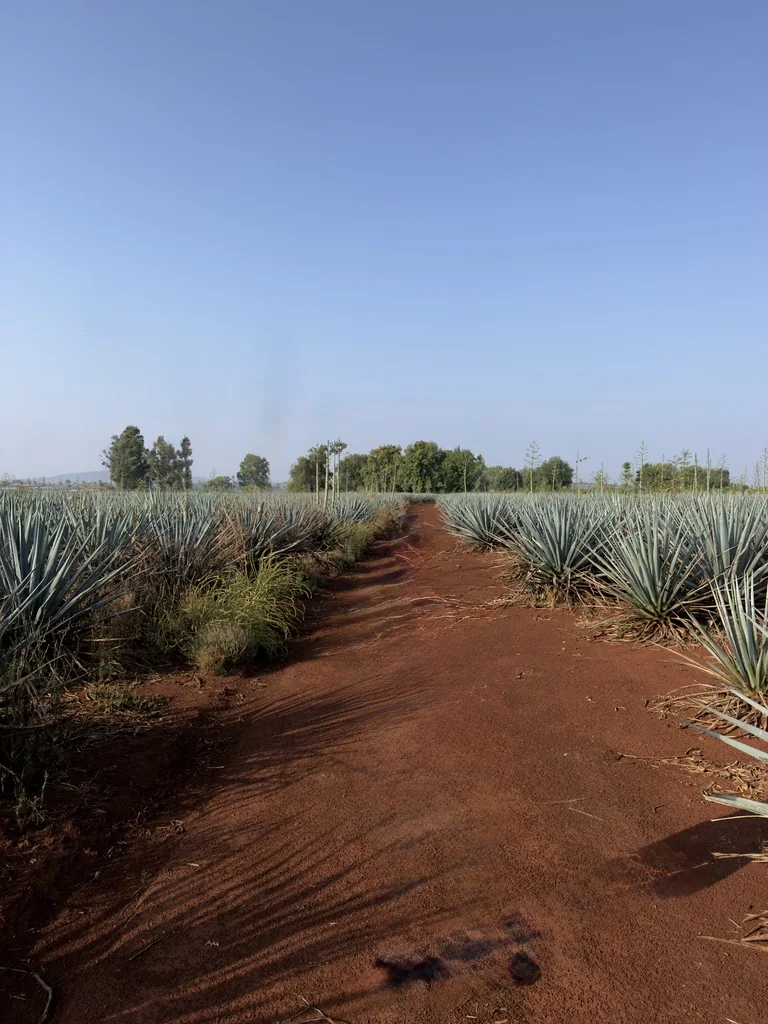
FIELD TO BOTTLE · THE COMPLETE JOURNEY
Every choice leaves
a possible signature.
Move through the production sequence and follow how plant material, process conditions, measurements and human judgment become the tequila in the glass.
This is a guide to the major flavor-relevant decisions, not one mandatory recipe. Production routes differ: some extract before cooking, some include fibers, and some skip wood maturation. Linked producer practices are examples; research findings apply to the conditions studied.
THE READING ROOM
Grounded in the source.
Official standards define requirements. Primary research tests particular conditions. Producer materials document practices and stated rationales. Plausible explanations are labeled; they are not presented as proven flavor outcomes.
- Consejo Regulador del TequilaProduction, categories and classes · official overview
- NOM-006-SCFI-2012Official tequila standard · categories, classes, abocado, alcohol strength and specifications
- Yeasts, temperature and aromaFermentation research · 2008
- Agave age, growing location and yeastFermentation research · 2009
- Fortaleza AñejoProducer’s tasting notes · illustrative example
- Volatile compounds during oak maturationTequila maturation in French oak · research, 2019
- Fortaleza Still StrengthAgave-forward tasting notes and bottling strength · producer example
- Planting, selection & harvestingPatrón · close penca trim and harvest evaluation; producer rationale
- Preparing the agavePatrón · piece size and cogollo removal; producer practice
- Agave cooking & Maillard compoundsMancilla-Margalli & López, 2002 · primary cooking research
- Milling the agavePatrón · extraction methods and wash-water concentration
- Agave age evaluated at industrial scaleFoods, 2021 · specific formulation conditions and analytical methods
- Brix: The essential knowledgeMETTLER TOLEDO · measurement principles and complex samples
- Brix during fermentationAnton Paar · density-based Brix and alcohol interference
- Nitrogen sources in tequila fermentationArrizon & Gschaedler, 2007 · rate and volatile-compound changes
- Fermentation conditions & bagazoPatrón · yeast, temperature, acidity and fibers
- Yeast and bacterial diversity in tequila fermentationAldrete-Tapia et al., 2020 · community dynamics and fermentative behavior
- Microbial communities across agave distilleriesJara-Servin et al., 2025 · broader traditional-agave evidence, not a citrus experiment
- The role of distillation on the quality of tequila2005 primary study · fraction composition, copper and cuts
- The aging processPatrón · number of prior uses, cellar conditions, entry proof and barrel selection
- Blending and bottlingPatrón · parallel distillates and final proofing; producer example
- Selective color removal for cristalino tequilaPrimary carbon-adsorption research · filtration selectivity
- Spirit measurementsAnton Paar · alcohol and extract measurement, with optional pH and turbidity extensions
- Tequila: sabor a MéxicoMexico’s agriculture ministry · oven liquids and bitter runnings
- Native yeast strains & the chemical profilePrimary agave fermentation research · native yeast strains, fermentation behavior and chemical profile
- Agave growth and harvestPatrón · carbohydrate reserves, flowering and harvest timing
- CRT laboratory servicesLaboratory analytical services · testing against official standards
- Methanol production kinetics during agave cookingAgave cooking study · stem and leaf fractions; mezcal evidence that supports a multi-factor mechanism
- Homoisoflavanones from Agave tequilana WeberMorales-Serna et al., 2010 · Molecules 15(5), 3295–3301 · laboratory analysis of Agave tequilana Weber plant material using chromatographic and spectroscopic methods
- Tequila productionCedeño, 1995 · Critical Reviews in Biotechnology · peer-reviewed overview of agave, cooking, milling, fermentation and distillation
- Tracing DEHP in the tequila production processFoods, 2024 · documents diffuser extraction, oven and autoclave hydrolysis, roller mills and column distillation in working distilleries
- Carbohydrates and fructans in agave of different agesArrizon et al., 2010 · Food Chemistry · how carbohydrate makeup changes as Agave tequilana matures
- Wood maturation of distilled beveragesMosedale & Puech, 1998 · Trends in Food Science & Technology · peer-reviewed review of barrel and cellar factors
- Maturation and key aroma compounds in tequilaGonzález-Robles & Cook, 2016 · Journal of the Institute of Brewing · vanillin, whisky lactones and guaiacol in aged tequila
- Ethanol and flavor perceptionIckes & Cadwallader, 2017 · Chemosensory Perception · peer-reviewed review of how alcohol strength changes aroma, taste and mouthfeel
- The history of tequilaOxford Research Encyclopedia of Latin American History · peer-reviewed reference · the early history of “mezcal wine” from Tequila
- Mezcal: A Review of Chemistry, Processing, and Potential Health BenefitsFoods, 2025 · peer-reviewed review · includes tahona milling and mezcal processing
- Paisaje de agaves y antiguas instalaciones industriales de TequilaINAH · heritage site text, in Spanish · the shift from pit ovens to steam masonry ovens
- Innovación en la industria del tequila: historia y tendenciasCárdenas, 2022 · Carta económica regional · in Spanish · evolution of ovens and autoclaves
- CRT circular on “additive-free” tequilaConsejo Regulador del Tequila · March 18, 2025 · technical infeasibility of certifying that claim
Reviewed October 30, 2026. Educational sensory descriptions are possibilities, not chemical identification from taste.